

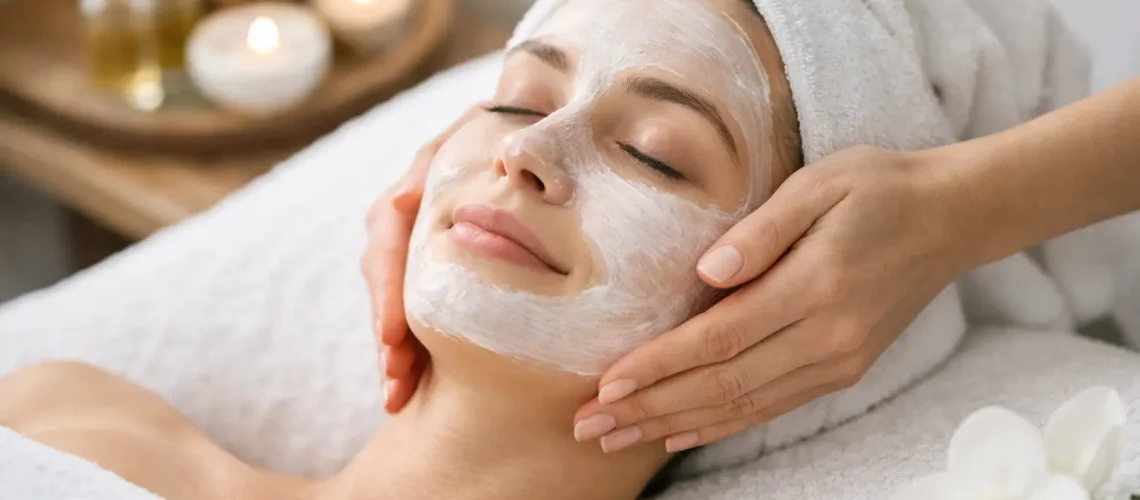
Sensitive skin rarely responds well to a facial chosen from a menu alone. The best facials for sensitive skin begin with listening: how your skin feels day to day, what triggers redness or stinging, which products you use, and whether your barrier is currently under stress. The goal is not to make skin look dramatically different by the end of one appointment. It is to leave your complexion feeling calm, hydrated, comfortable, and cared for.
For many people, sensitivity is not a permanent skin type so much as a signal. Weather changes, over-exfoliation, active acne products, retinoids, stress, allergies, and even a new cleanser can make the skin more reactive. A beautiful facial should respect that signal rather than push through it.
What Sensitive Skin Needs From a Facial
The outer barrier of the skin holds moisture in and helps irritants stay out. When that barrier is compromised, skin may feel tight, burn when products are applied, develop dry patches, or flush easily. A facial designed for sensitive skin should prioritize barrier support over aggressive correction.
That usually means gentle cleansing, minimal friction, soothing hydration, and carefully selected ingredients. It also means an experienced provider adjusts the service in real time. If a product tingles beyond a mild, brief sensation or the skin begins to look increasingly inflamed, the right approach is to modify the treatment, not simply continue.
Sensitive skin can still benefit from professional care. The difference is in the treatment plan, pacing, and product selection. A calmer complexion often looks brighter and more refined because it is no longer fighting irritation.
The Best Facials for Sensitive Skin
There is no single best choice for every reactive complexion. Rosacea-prone skin, acne-prone skin, dry mature skin, and skin sensitized by active products may all need a different approach. These facial styles are often the most comfortable starting points when customized thoughtfully.
Hydrating, barrier-support facials
A hydration-focused facial is often the most reliable option for sensitive skin, especially when the skin feels dry, tight, flaky, or easily irritated. This type of treatment centers on gentle cleansing, replenishing moisture, and applying calming serums or masks that support a healthy barrier.
Look for formulas that focus on humectants, soothing botanical ingredients, ceramides, and nourishing lipids rather than strong acids or heavily fragranced products. The treatment should feel restorative, not intense. Afterward, skin may appear plumper, softer, and more luminous without the uncomfortable heat or prolonged redness that can follow more aggressive services.
Gentle enzyme facials
When dullness or surface texture is a concern, a gentle enzyme treatment can be a more sensitive-skin-friendly alternative to a traditional scrub or stronger chemical exfoliation. Enzymes work at the surface to loosen dead skin cells, helping reveal a smoother look without the abrasion of physical exfoliants.
This option depends on the enzyme, its strength, and the condition of your skin that day. Even naturally derived enzymes can be too stimulating for a compromised barrier or a rosacea flare. A provider should use a conservative application time and be prepared to skip exfoliation altogether if your skin is feeling reactive.
Calming facials for redness-prone skin
For clients who experience frequent flushing, visible redness, or a sensation of heat, the best facial may be one that intentionally does less. Calming facials can include cool compresses, gentle massage techniques, moisture-rich masks, and carefully chosen products intended to comfort the skin.
This is not the time for vigorous extractions, steam-heavy services, or multiple active ingredients layered together. The immediate goal is to reduce the feeling of stress in the skin. Over time, consistent barrier-conscious care can help redness-prone skin look more even and feel less unpredictable.
LED light therapy with a gentle facial
LED light therapy may be a thoughtful addition for some sensitive-skin clients, particularly when paired with a calming, hydrating facial. Depending on the light used and your individual concerns, LED can support a more balanced-looking complexion without physical exfoliation or downtime.
Still, light therapy is not automatically right for everyone. Certain medications, photosensitivity conditions, and specific skin concerns may require a different approach. A consultation helps determine whether this addition belongs in your treatment plan and how often it should be performed.
Treatments That May Need a Lighter Touch
Sensitive skin does not mean you must avoid every corrective treatment forever. It does mean timing and customization matter. Strong peels, microdermabrasion, deep extractions, dermaplaning, and high-heat treatments can be valuable services for the right client, but they may not be ideal when the skin is dry, inflamed, peeling, sun-exposed, or newly adjusted to prescription skincare.
For example, someone with mild sensitivity and stubborn texture may eventually tolerate a very gentle peel series. Someone actively experiencing burning, eczema patches, or a rosacea flare may benefit far more from hydration and barrier support first. The best results come from treating the skin in front of you, not from following a standard protocol.
Be honest about recent treatments and your home routine. Let your provider know if you use retinoids, exfoliating acids, acne medication, or any prescription topical. Share whether you have had an allergic reaction to skincare, are pregnant or breastfeeding, or have a history of cold sores if treatments around the mouth are being considered. These details make personalization safer and more effective.
How to Prepare for a Sensitive-Skin Facial
A few calm days before your appointment can make a meaningful difference. Avoid trying a new active product, using an at-home peel, or scrubbing away dry skin. If you use retinoids or exfoliating acids, ask your provider whether you should pause them beforehand. The answer depends on the treatment and your skin’s tolerance.
Arrive with a clear picture of what your skin has been doing lately. Has it been stinging after cleansing? Are you recovering from a breakout? Did a new foundation or sunscreen cause irritation? This information gives your provider the context needed to tailor every step.
At Envious Aesthetics Medspa, a personalized approach can turn a facial from a simple beauty appointment into a more considered moment of skin care. Your comfort matters just as much as visible radiance, and no treatment should feel like a test of what your skin can endure.
Aftercare That Protects Your Results
The first 24 to 48 hours after a facial are an opportunity to keep skin settled. Stick with a gentle cleanser, a simple moisturizer, and daily broad-spectrum sunscreen. Avoid exfoliating products, hot yoga, saunas, and prolonged heat if you tend to flush easily. Resist the urge to introduce a new serum just because your skin looks especially smooth.
If your provider recommends a home routine, simplicity is often the strength of the plan. A well-tolerated cleanser, moisturizer, and sunscreen can do more for a sensitive complexion than a crowded shelf of strong products. Once your skin feels consistently calm, targeted products can be added slowly and with purpose.
A Facial Should Leave Skin More Comfortable
The most beautiful sensitive-skin facial is not necessarily the one with the most steps, the strongest exfoliation, or the most dramatic same-day glow. It is the treatment that respects your skin’s limits while helping it look rested, hydrated, and naturally radiant.
Choose a provider who welcomes questions, adjusts the plan when needed, and sees skin health as a long-term relationship rather than a one-time fix. When your facial is built around comfort and thoughtful care, confidence tends to follow quietly and beautifully.

No comment yet, add your voice below!