

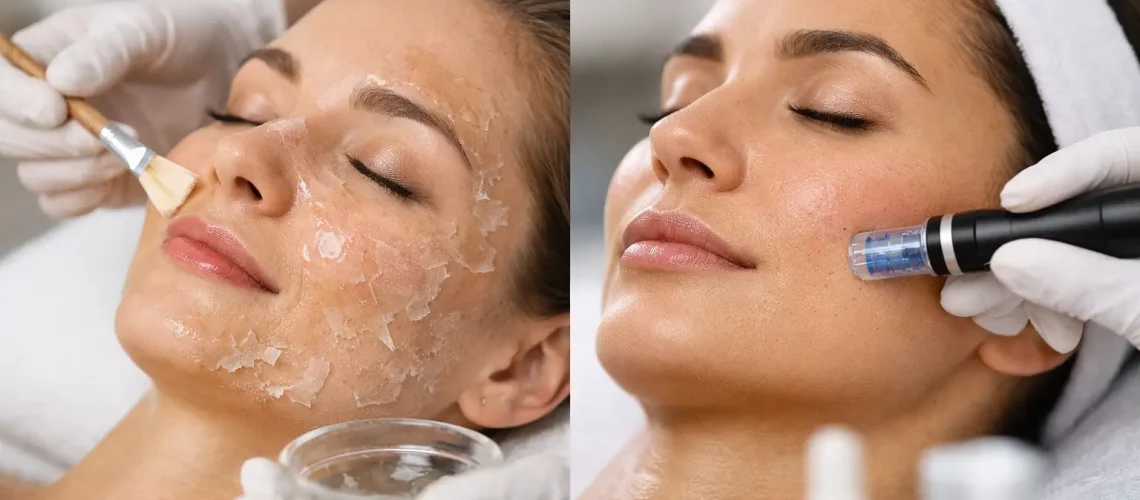
Some skin concerns ask for a brighter surface. Others need support deeper within the skin. That distinction is at the heart of chemical peel vs microneedling. Both treatments can refine the complexion, soften visible signs of aging, and help you feel more confident in bare skin, but they work in very different ways.
The right choice is rarely about which treatment is “better.” It is about your skin, your goals, your schedule, your sensitivity level, and the kind of results you want to build over time. A thoughtful consultation should leave you feeling informed and cared for, never pressured into a one-size-fits-all answer.
Chemical Peel vs Microneedling: The Core Difference
A chemical peel uses a carefully selected solution to exfoliate the skin and encourage cell turnover. Depending on the formula and strength, a peel can work primarily at the surface or reach more deeply into the skin. It is especially valued for bringing a dull, uneven complexion back to a clearer, more radiant place.
Microneedling uses a device with very fine, sterile needles to create controlled microchannels in the skin. Those tiny channels trigger the body’s natural repair response and support collagen and elastin production over time. Rather than focusing on exfoliation, microneedling is designed to improve the skin’s underlying texture and resilience.
Both treatments can be customized. That matters because a gentle peel for a first-time client with mild congestion is very different from a more corrective peel recommended for visible sun damage. In the same way, microneedling depth, treatment areas, and the number of sessions should be adjusted with care rather than chosen from a menu alone.
When a Chemical Peel May Be the Better Fit
A chemical peel is often a beautiful choice when your main goals involve brightness, clarity, and a smoother-looking surface. If your skin appears tired, rough, congested, or uneven, a properly selected peel can reveal a fresher-looking complexion with relatively little interruption to your routine.
Peels may be considered for concerns such as mild discoloration, sun-related dullness, acne-prone skin, superficial acne marks, fine lines, rough texture, and uneven tone. They can also be a helpful option before a special event, provided there is enough time for your skin to recover fully and settle into its glow.
The experience and recovery depend on the type of peel. Some light peels cause only mild tightness, dryness, or flaking for a few days. Others can create more visible peeling and require additional downtime. Visible peeling is not the only measure of a peel’s effectiveness. A gentle, professionally chosen treatment can still create meaningful improvement while respecting your skin barrier.
Chemical peels require thoughtful aftercare. Your skin may be more sensitive to sun exposure, active skincare ingredients, heat, and friction while it recovers. You should never pick at peeling skin. Gentle cleansing, consistent hydration, and daily sunscreen help protect the results you are investing in.
Chemical Peels Often Suit Clients Who Want
A peel may feel especially aligned if you are looking for a refreshed, polished appearance, want to address surface-level concerns, or prefer a treatment that can be tailored from light maintenance to more corrective renewal. It can also be a practical choice for clients who are working toward clearer skin and want to pair professional care with a balanced at-home routine.
When Microneedling May Be the Better Fit
Microneedling is often recommended when texture is the primary concern. If you notice acne scarring, enlarged-looking pores, fine lines, early laxity, or a crepey quality that skincare alone has not improved, collagen-focused treatment may offer the more strategic path.
Because microneedling encourages a gradual remodeling process, its results tend to build over a series of appointments. Many clients begin to notice a healthier-looking glow first, followed by continued improvement in skin smoothness and firmness over the following weeks. Patience is part of the process, and that gradual approach is often what makes the outcome look naturally refreshed rather than suddenly altered.
Expect temporary redness after microneedling, similar in appearance to a mild sunburn. Some clients also experience warmth, tightness, or minor swelling, particularly during the first day or two. The recovery is usually manageable, but the skin needs time to heal. Makeup, exercise, heat exposure, and certain skincare products may need to be paused briefly based on your provider’s instructions.
Microneedling is not a treatment to schedule casually before an important occasion. Give yourself enough recovery time, especially if this is your first session. Your provider can help you plan around weddings, photographs, vacations, or other moments when you want your skin to look calm and luminous.
Microneedling Often Suits Clients Who Want
Microneedling can be a strong option for someone seeking gradual improvement in acne scars, texture, fine lines, and overall skin quality. It is also appealing for clients who value a collagen-supporting treatment plan with results that become more visible over time.
Results, Downtime, and the Reality of “Best”
Comparing chemical peel vs microneedling often comes down to what you hope to see in the mirror. A peel may create a more immediate sense of brightness and smoothness, especially when dullness or uneven tone is the concern. Microneedling typically asks for more patience, but it may be more appropriate for textural issues that involve the deeper structure of the skin.
Downtime is not identical for every client. A light peel might involve minimal flaking, while a stronger peel can require several days of visible peeling. Microneedling commonly creates one to three days of redness, though individual recovery varies. Your skin type, the treatment intensity, your aftercare, and your sensitivity all play a role.
Cost and treatment frequency also deserve an honest conversation. One corrective treatment is not always more valuable than a series of gentler treatments. The goal is not to chase the most intensive option. It is to create steady progress without compromising skin health or comfort.
Can You Combine Chemical Peels and Microneedling?
In the right hands, chemical peels and microneedling can complement one another within a longer-term skin plan. For example, a provider may use peels at carefully spaced intervals to support clarity and tone, while reserving microneedling sessions for texture and collagen support.
They should not be stacked indiscriminately or performed too close together. Both treatments ask the skin to repair itself, and over-treating can lead to prolonged irritation, sensitivity, or a weakened barrier. The timing should be determined by your skin’s response, the type of peel, the microneedling depth, and your overall goals.
This is also why professional guidance matters for clients managing active acne, melasma, rosacea, eczema, a history of cold sores, darker skin tones prone to post-inflammatory hyperpigmentation, or the use of prescription retinoids. These factors do not always rule out treatment, but they do change the approach. A careful provider may recommend preparation, a gentler protocol, a different service, or waiting until the skin is more stable.
Choosing a Treatment With Confidence
Bring more than one concern to your consultation. It is helpful to say, for example, “I want brighter skin, but I am also worried about acne scars,” or “I want to improve fine lines, but I cannot have much downtime.” Those details allow your provider to shape a plan around your real life, not just a single symptom.
At Envious Aesthetics Medspa, personalized care means looking beyond a trend or a quick fix. Your treatment recommendation should account for your skin condition, lifestyle, upcoming events, previous treatments, and comfort level. Beautiful results are most sustainable when the plan is measured, intentional, and tailored to you.
Whether your next step is a gentle peel, a series of microneedling sessions, or simply a conversation about your options, choose care that helps your skin feel supported. The most compelling glow is not overdone – it is healthy-looking, well cared for, and unmistakably your own.

No comment yet, add your voice below!