

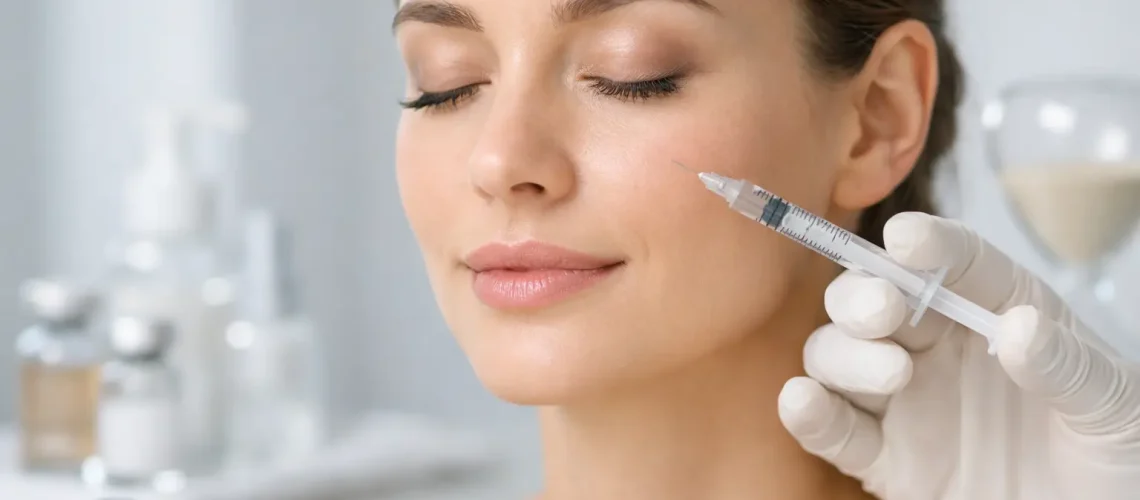
A beautifully balanced filler result is not meant to look frozen in time. It should soften and settle naturally with your expressions, then be thoughtfully refreshed before volume loss becomes the focus again. This dermal filler longevity guide explains what influences how long fillers last, why timelines vary by area, and how a personalized plan can help you maintain a polished, refreshed appearance without looking overdone.
What Determines How Long Dermal Fillers Last?
Dermal fillers are typically made with hyaluronic acid, a substance that attracts water and occurs naturally in the body. Over time, the body gradually metabolizes the filler. That process is expected, but it is not identical for every client.
The product selected, treatment area, amount placed, injection technique, facial movement, metabolism, and your own anatomy all affect longevity. A client receiving subtle lip enhancement may notice a different timeline than someone restoring cheek structure or smoothing deeper folds around the mouth. This is why a one-size-fits-all answer can be misleading.
Your first treatment may also feel shorter-lived than later maintenance appointments. When volume is restored strategically over time, many clients find that maintaining their preferred look requires less correction than starting over after all visible volume has faded. The goal is not to chase more filler. It is to preserve facial balance with an approach that feels right for you.
Typical Dermal Filler Longevity by Treatment Area
While your provider will offer the most accurate recommendation for your facial structure and treatment goals, these general ranges can help set expectations.
Lips: Often 6 to 12 Months
Lip filler is placed in an area with frequent movement. Talking, smiling, eating, and natural facial expression all contribute to its comparatively shorter lifespan. Some clients enjoy their results closer to six months, while others retain visible softness and shape for closer to a year.
A conservative approach is especially valuable in the lips. Rather than adding more product simply because a small amount has faded, your provider can assess whether a touch-up is needed or whether your lips still have the shape and hydration you love.
Cheeks: Often 12 to 24 Months
Cheek filler often lasts longer because the midface is generally less mobile than the lips. When placed with an understanding of facial anatomy, filler can restore soft contour, support, and youthful-looking volume without creating an exaggerated effect.
Cheek treatment can also influence the way the lower face appears. For some clients, restoring midface support helps create a more rested look around the nasolabial folds and jawline. That does not mean cheeks are the answer for every concern, but it highlights why treatment should be planned as a whole-face strategy rather than a collection of isolated areas.
Chin and Jawline: Often 12 to 24 Months
Structural areas such as the chin and jawline may hold filler well, particularly when a firmer product is selected for definition and support. Results can last a year or longer, although metabolism, product choice, and the amount of correction needed will still make a difference.
These treatments require restraint and precision. A refined profile is often created through subtle changes that complement your features, not through excessive volume or a sharply altered appearance.
Smile Lines and Marionette Lines: Often 6 to 18 Months
Filler around the mouth can soften deeper creases, but this area is highly expressive. Results may fade sooner than filler placed in less mobile regions. In some cases, volume loss in the cheeks or changes in skin quality contribute to the concern, so treating the line directly may not always be the best first step.
A consultation allows your provider to determine whether filler, neuromodulator treatment, skin-focused care, or a combination approach will create the most natural result.
Under-Eye Filler: Often 9 to 18 Months
Tear trough filler can create a smoother, more rested appearance for the right candidate, but it is a highly specialized treatment area. Under-eye hollows may be related to volume loss, pigmentation, skin laxity, puffiness, or all of the above. Filler is not the ideal solution for every under-eye concern.
Because this area is delicate, a careful assessment matters more than a quick timeline. A conservative plan and an experienced injector are essential for an elegant result.
Why Your Results May Last Longer or Shorter
Metabolism is part of the story, but it is not the only factor. Clients with very active lifestyles, fast metabolisms, or highly expressive facial movement may notice that certain areas fade faster. Sun exposure, smoking, significant weight changes, and inconsistent skin care can also affect how the face ages around the filler.
Product selection matters as well. Softer, more flexible fillers are often chosen for areas that need natural movement, while more supportive fillers may be selected for contour and structure. The best product is not necessarily the one that lasts longest. It is the one that fits the area, your anatomy, and the look you want to achieve.
Injection placement is equally meaningful. Filler placed at the appropriate depth and in the right facial plane can create results that look more integrated and may wear more gracefully. This is one reason treatment should never be reduced to simply choosing a number of syringes.
How to Help Your Filler Results Look Their Best
You cannot stop your body from naturally metabolizing filler, and any promise to do so should raise questions. You can, however, support the quality of your skin and make thoughtful choices that help your results remain polished between visits.
Protecting your skin from ultraviolet exposure is one of the most practical habits. Daily sunscreen, shade when possible, and consistent skin care help preserve the overall appearance of your complexion. Hydration, balanced nutrition, avoiding smoking, and maintaining a stable weight can also support your broader aesthetic goals.
Follow all aftercare instructions from your provider after treatment. Depending on the area and product used, you may be advised to avoid strenuous exercise, excessive heat, alcohol, pressure on the treatment area, or facial massage for a short period. These recommendations are not about making filler last forever. They are designed to support a smooth recovery and allow the product to settle properly.
When Should You Schedule a Filler Refresh?
The right time for a refresh is usually before you feel compelled to make a dramatic correction. For many clients, a maintenance visit every six to 12 months keeps results soft and consistent. Others may only need to revisit structural areas once a year or less often.
Instead of booking based only on a calendar reminder, pay attention to the changes you see. Has lip definition softened? Do your cheeks look less supported in photos? Are lines beginning to return when your face is at rest? These are useful reasons to schedule an assessment.
A skilled provider will also tell you when waiting is the better choice. If your facial balance still looks beautiful, adding filler prematurely may not improve the result. Natural-looking aesthetics depend on knowing when to enhance and when to preserve.
A Personalized Plan Creates the Most Natural Longevity
The most satisfying filler results are rarely about having the most product or choosing the longest-lasting option. They come from a treatment plan that considers your features, skin quality, expressions, lifestyle, and comfort level with maintenance.
At Envious Aesthetics Medspa, the conversation begins with your vision of refreshed beauty. Whether you are considering filler for the first time or maintaining a look you already love, a personalized consultation can clarify what is realistic, what will complement your features, and when a lighter touch is the most beautiful choice.



No comment yet, add your voice below!