

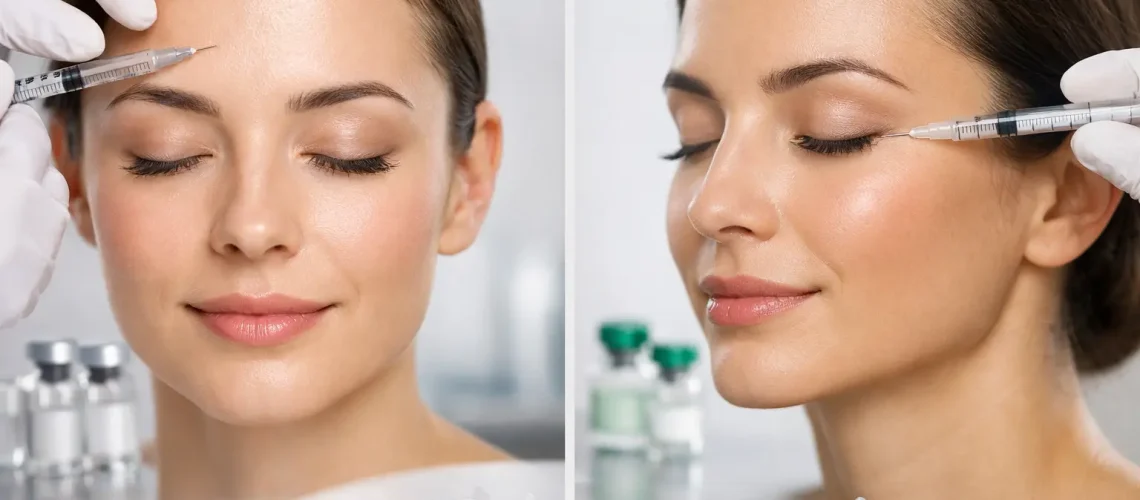
A softened frown line can make you look more rested without changing what makes your face yours. That is the real question behind Botox versus Dysport: not which name is better, but which treatment approach best supports your facial movement, anatomy, timeline, and preference for naturally refreshed results.
Both are trusted injectable neuromodulators used to temporarily relax targeted muscles. When those muscles contract less forcefully, the expression lines they create can appear smoother. The right choice is highly personal, and a thoughtful consultation matters far more than following a trend or choosing based on a single friend’s experience.
Botox Versus Dysport: The Similarities
Botox Cosmetic and Dysport are prescription injectable treatments made from botulinum toxin type A. In aesthetic care, they are commonly used to soften dynamic lines – the lines formed by repeated facial expressions. Think forehead lines, the vertical “11” lines between the brows, and crow’s feet around the eyes.
Neither treatment is designed to erase every line or create a frozen appearance. The goal is to strategically reduce the pull of specific muscles while preserving the movement that keeps your expressions recognizable. For clients who value polished, subtle results, that balance is everything.
Treatment appointments are typically brief. After a consultation and facial assessment, your injector places small amounts of product into carefully selected muscles using a fine needle. Most clients return to their normal routine afterward, with a few temporary precautions to protect their results.
The Key Differences Between Botox and Dysport
While Botox and Dysport serve a similar purpose, they are different formulations. Their dosing units are not interchangeable, meaning one unit of Botox does not equal one unit of Dysport. This is why comparing treatments by unit price alone can be misleading.
Onset can vary
Some clients notice Dysport beginning to take effect within two to three days, while Botox may begin to show changes around three to five days. For both, results continue to develop over the next week or two. A special event coming up may influence your timing, but it is still wise to schedule treatment at least two weeks ahead when possible.
Faster onset is not a guarantee, and it should not be the only deciding factor. Your metabolism, the area treated, the strength of your facial muscles, and your previous experience with neuromodulators can all affect when you see a visible change.
The way the product spreads may feel different
Dysport is often described as having a slightly broader spread once injected. In the right hands, that characteristic can be useful for a larger area such as the forehead. Botox can also create beautiful forehead results, but your injector may approach placement and dosing differently based on the product selected.
This is not a simple matter of one product being more precise or more powerful. Technique, anatomy, and treatment planning determine precision. An experienced injector evaluates where your muscles begin and end, how strongly they pull, and how your brows and eyelids respond to movement before making recommendations.
Dosing and cost should be discussed as a complete plan
Dysport often requires a higher number of units than Botox for the same area, but that does not automatically make it more expensive or less expensive. Because the unit scales differ, the meaningful comparison is the total cost of treating your goals with an appropriate dose.
A transparent consultation should focus on the planned treatment area, the amount of product likely needed, the expected outcome, and maintenance expectations. A very low price can be tempting, but aesthetic injectables are not the place to compromise on product sourcing, clinical judgment, or safety.
Which Areas Can Be Treated?
Both Botox Cosmetic and Dysport are widely used for the upper face, particularly frown lines, forehead lines, and crow’s feet. Depending on your provider’s assessment and the appropriate use of the product, neuromodulators may also be considered for concerns such as a gummy smile, chin dimpling, lip lines, neck bands, or jaw tension.
Each area requires a different strategy. The forehead, for example, cannot be treated in isolation. It works in partnership with the muscles that shape your brow position. Over-relaxing the wrong area can leave the face looking heavy or less expressive, which is why a customized plan is so valuable.
If your concern is a line that remains visible even when your face is at rest, a wrinkle relaxer may still help prevent it from deepening, but it may not erase it completely. In those cases, your provider may discuss a broader skin-rejuvenation plan that could include medical-grade skincare, resurfacing treatments, or other options suited to your skin and goals.
How Long Do Botox and Dysport Last?
For many clients, both treatments last about three to four months. Some people metabolize treatment more quickly, while others enjoy results a little longer. The treated area, dosage, individual muscle activity, and consistency of maintenance can all play a role.
Regular appointments do not have to mean looking overdone. In fact, keeping up with treatment before movement fully returns can allow for smaller, more refined adjustments over time. The ideal schedule is one that keeps you feeling like yourself – simply more rested, smooth, and confident.
It is also normal for your first treatment to be a learning experience. Your injector may start conservatively, then refine your plan at a follow-up appointment or at your next visit. A measured approach gives your provider the opportunity to see how your face responds rather than trying to accomplish too much at once.
Choosing Between Botox and Dysport
The best choice often comes down to your individual treatment history and your provider’s clinical recommendation. If you have tried one product and loved your result, there may be no reason to change. If you felt your results appeared too slowly, faded sooner than expected, or did not give you the softness you wanted, trying the other formulation may be worth discussing.
Your lifestyle and timeline can matter, too. Someone preparing for photographs, a wedding, or a professional event may prioritize treatment timing. Someone beginning injectables for the first time may prioritize a conservative dose and a clear follow-up plan. Neither approach is better. They simply reflect different goals.
During a personalized consultation, be ready to share what you notice when you look in the mirror: Do your brows feel heavy? Are your frown lines your main concern? Do you want movement in your forehead but less creasing? Have you had a treatment elsewhere that you loved or would prefer to adjust? Those details help shape results that feel intentional rather than generic.
What to Expect After Treatment
Most clients experience only mild, short-lived effects such as pinpoint redness, swelling, tenderness, or small bumps at the injection sites. These often settle quickly. Bruising is possible, especially if you are prone to it or take certain medications or supplements.
Your provider will give you personalized aftercare instructions. In general, clients are often advised to avoid rubbing or massaging treated areas, strenuous exercise, excessive heat, and lying flat for a period after their appointment. Follow the directions you receive rather than relying on social media advice, since recommendations can vary with your treatment plan.
Neuromodulators are medical treatments, not one-size-fits-all beauty services. They may not be appropriate for everyone, including people who are pregnant or breastfeeding, have certain neuromuscular conditions, have an infection at the treatment site, or have a history of allergy to an ingredient in the product. A qualified provider should review your health history before treatment.
A Refreshed Look Starts With the Right Plan
Whether Botox or Dysport is the better fit, the most beautiful results come from restraint, expertise, and a plan built around your face rather than a formula. At Envious Aesthetics Medspa, that conversation begins with understanding how you want to feel when you leave: still expressive, still recognizable, and confidently refreshed.



No comment yet, add your voice below!