

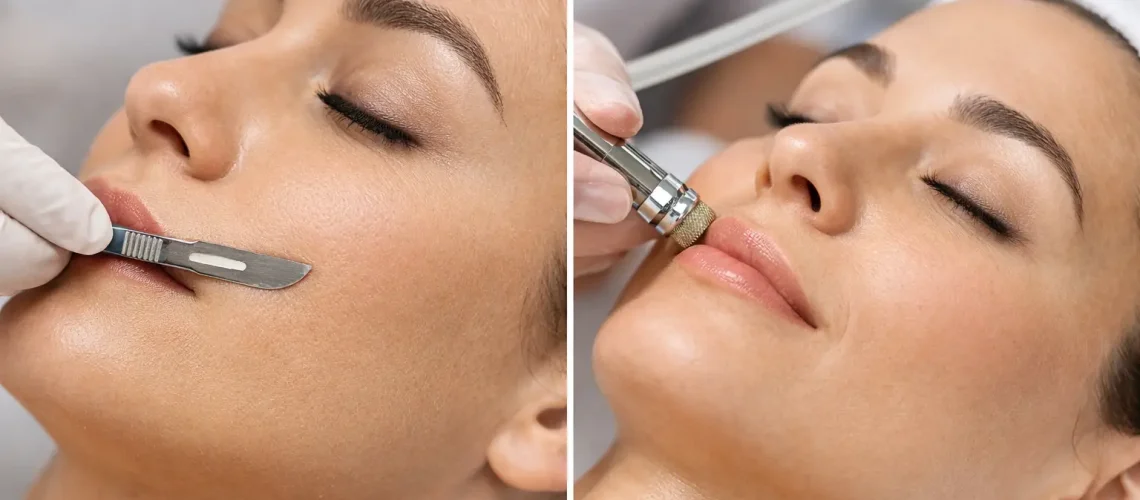
A close-up mirror can make texture, dullness, and peach fuzz feel more noticeable than they did yesterday. When you want skin that looks smoother and makeup that applies more beautifully, dermaplaning versus microdermabrasion is a worthwhile comparison. Both treatments refresh the skin’s surface with little to no downtime, but they work differently and suit different concerns.
At Envious Aesthetics Medspa, the right recommendation begins with more than a skin goal. Your sensitivity, active skin conditions, current routine, and desired results all help shape a treatment plan that feels comfortable, refined, and truly suited to you.
Dermaplaning Versus Microdermabrasion: The Key Difference
Dermaplaning is a manual exfoliation treatment. A trained provider uses a sterile, single-use surgical blade held at a precise angle to gently remove the outermost layer of dead skin cells and fine vellus hair, commonly called peach fuzz. The treatment does not pull hair from the root. Instead, it carefully skims the surface of the skin, creating an immediately softer, smoother feel.
Microdermabrasion is a mechanical exfoliation treatment. It uses a specialized device with either a diamond-tipped wand or fine crystals and suction to buff away superficial dead skin cells. The controlled suction also helps lift debris from the skin’s surface. While both services improve radiance, microdermabrasion is often chosen for texture concerns that go beyond facial hair, such as mild congestion, roughness, or the appearance of enlarged pores.
Neither treatment is designed to dramatically change deep scars, severe acne, or significant wrinkles in one visit. Think of them as polished maintenance treatments that can support a healthy-looking glow and make the skin feel more receptive to a thoughtfully selected skincare routine.
What Dermaplaning Does Best
Dermaplaning is especially appealing for clients who want an instant smooth finish. Because it removes fine facial hair along with surface buildup, many clients notice that foundation glides on more evenly and skincare feels more luxurious afterward. It is a lovely option before a special event, professional photos, or any time you want your complexion to look freshly polished without a recovery period.
It can also benefit dry or dull-looking skin that has accumulated surface cells. Once that buildup is removed, the complexion may appear brighter and feel softer to the touch. For many people, the visual result is subtle but meaningful: skin looks refreshed, not altered.
One persistent concern deserves reassurance. Dermaplaning does not cause hair to grow back darker, thicker, or faster. Vellus hair grows back according to its natural cycle and texture. The blunt edge of new growth can sometimes feel different as it returns, but the hair itself has not changed.
Dermaplaning may be less appropriate when there is active acne, open skin, a cold sore outbreak, sunburn, or an inflamed rash. Skimming over raised blemishes can irritate the area and may spread bacteria. Clients using certain prescription acne treatments or strong exfoliating products may also need to pause or adjust their routine before treatment, based on professional guidance.
What Microdermabrasion Does Best
Microdermabrasion is often the stronger choice when your primary concern is uneven texture rather than facial hair. The treatment’s device-assisted exfoliation can help the skin look clearer and more refined over a series of appointments. It is frequently considered for mild roughness, surface-level dullness, early signs of sun-related texture changes, and congestion that leaves skin looking less luminous.
A provider can tailor the intensity based on your skin type and tolerance. That customization matters. A gentle pass may offer a soft refresh for a sensitive complexion, while a more targeted approach may be appropriate for skin that is resilient and textured. The goal is never to over-exfoliate. Healthy skin should feel renewed, not raw.
Microdermabrasion can be a wonderful addition to a consistent skincare plan, but it is not the right solution for every concern. If redness, visible capillaries, rosacea flares, eczema, active inflammatory acne, or very sensitive skin are present, another facial approach may be more comfortable. Your provider should examine the skin and discuss whether the treatment supports its current condition.
How the Treatments Feel and What to Expect
Dermaplaning generally feels like a light, dry brushing sensation. You may hear a soft scraping sound as the blade moves across the skin, but the treatment should not be painful. A typical appointment is efficient and relaxing, especially when paired with calming skincare selected for your complexion.
Microdermabrasion feels different. Most clients describe the sensation as gentle vibration combined with mild suction. There may be a scratchy or sandy feeling as the device passes over the face. It should not feel aggressively abrasive. If it does, let your provider know right away so the settings can be adjusted.
Both treatments can leave skin temporarily pink, particularly if your complexion is fair, sensitive, or easily flushed. This usually settles quickly, though some clients prefer to schedule their first appointment several days before an important event just to see how their skin responds. For most people, there is no significant social downtime.
After either service, skip exfoliating acids, retinoids, scrubs, and strong acne products for the period recommended by your provider. Keep your routine gentle, hydrate well, and wear broad-spectrum sunscreen daily. Freshly exfoliated skin can be more vulnerable to irritation and sun exposure, so aftercare is part of protecting your results.
Which Treatment Is Better for Your Skin Goals?
The best choice depends on what you see in the mirror and what you want the treatment to accomplish. If peach fuzz and an uneven makeup finish are your main frustrations, dermaplaning is usually the more direct fit. It delivers that exceptionally smooth canvas while gently lifting dull surface cells.
If you are more concerned with rough texture, mild congestion, or a complexion that looks tired despite a good home routine, microdermabrasion may be the better match. Its controlled mechanical exfoliation can provide a more targeted surface renewal experience.
Sometimes the answer is neither treatment on its own. Skin that is dehydrated may need restorative hydration before more exfoliation. Skin with active breakouts may benefit from a facial designed to calm congestion rather than a treatment that could aggravate inflamed areas. Deeper acne scarring, pigmentation concerns, and advanced signs of aging may call for a different professional treatment strategy altogether.
That is why a personalized consultation matters more than choosing a service based on a trend or a friend’s result. Skin changes with seasons, hormones, medications, and lifestyle. A treatment that was ideal six months ago may not be the most supportive choice now.
How Often Can You Schedule Treatment?
Dermaplaning is commonly scheduled about every three to four weeks, allowing time for the skin’s natural renewal cycle and vellus hair to return. Microdermabrasion is also often performed in a series spaced several weeks apart, although the right frequency depends on treatment intensity and how your skin responds.
More is not always better. Overdoing exfoliation can weaken the skin barrier, leading to dryness, sensitivity, flaking, and unexpected breakouts. A measured plan that balances professional treatments with gentle home care usually delivers the most graceful, sustainable results.
If you are preparing for an event, plan ahead rather than booking your first exfoliation treatment the day before. A consultation can help you select a timeline that gives your skin the space to settle into its healthiest-looking glow.
Beautiful skin care is not about choosing the most intense treatment. It is about choosing the one that respects where your skin is now and helps it look naturally refreshed from there.

No comment yet, add your voice below!