

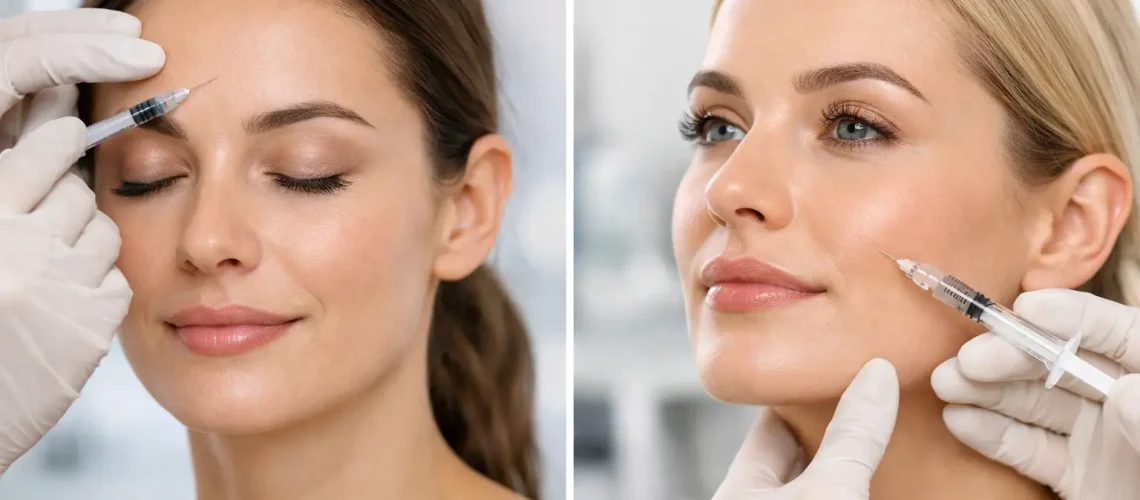
A forehead line that appears when you raise your brows and cheeks that seem less lifted than they once did may both be called “wrinkles,” but they do not call for the same treatment. The Botox vs dermal filler conversation is less about choosing the treatment that is better overall and more about identifying what is creating the change you see in the mirror.
For many clients, the most beautiful result is not a visibly altered face. It is looking rested, balanced, and like yourself on a particularly good day. Understanding the role of each injectable is the first step toward making a confident, informed decision.
Botox vs Dermal Filler: The Core Difference
Botox is a neuromodulator. It works by temporarily relaxing selected facial muscles that repeatedly contract and create expression lines. Think of the horizontal lines across the forehead, the “11s” between the brows, or crow’s feet that appear beside the eyes when you smile. By softening the muscle movement behind these lines, Botox can help the skin look smoother and prevent deeply etched expression lines from becoming more pronounced over time.
Dermal filler works differently. Rather than addressing muscle movement, filler replaces or enhances volume beneath the skin. Many fillers are made with hyaluronic acid, a substance naturally found in the body that attracts water and creates soft, flexible support. A carefully placed filler treatment can restore contour in areas that have begun to look hollow, flattened, or less defined.
The simplest distinction is this: Botox relaxes movement, while dermal filler restores volume and structure. Both can support natural-looking rejuvenation, but they solve different concerns.
When Botox May Be the Better Choice
Botox is often an excellent option when the lines you notice are most visible with facial expression. If your forehead looks smooth at rest but creases when you lift your brows, muscle movement is likely playing a significant role. The same is true for lines around the eyes that deepen with smiling or frown lines that appear when you concentrate.
Treatment is precise. Your provider evaluates your natural facial movement, brow position, muscle strength, and aesthetic goals before selecting injection points and dosage. This matters because the goal is not to erase expression. The goal is to soften lines while preserving the personality and animation that make your face your own.
Results typically begin to appear within several days, with the full effect developing around two weeks after treatment. Botox is temporary, and many clients return about every three to four months to maintain their preferred look. Timing varies based on metabolism, the area treated, dosage, and how much movement is present naturally.
Botox may also be chosen as a preventive treatment. When used thoughtfully, it can reduce the repetitive folding that contributes to deeper expression lines over time. Preventive does not have to mean early or excessive. It simply means treating the concern appropriately for your skin, facial anatomy, and goals.
When Dermal Filler May Be the Better Choice
Dermal filler is usually considered when the concern is volume loss, contour, or facial balance rather than active muscle movement. Over time, natural collagen, fat pads, and bone structure change. This can create hollows beneath the eyes, flattening in the cheeks, less definition along the jawline, or folds around the mouth that remain visible even when your face is at rest.
A strategic amount of filler can bring gentle support back to these areas. In the lips, filler may add hydration, definition, symmetry, or a soft increase in volume. In the cheeks, it can restore a subtle lift that helps the midface appear more refreshed. Along the chin or jawline, filler may improve proportion and profile balance.
The word “filler” can make some people picture an overdone result. That outcome is not inevitable, and it should not be the standard. The most refined approach respects facial proportions, skin quality, and the amount of product the area can comfortably support. Sometimes the right plan is a very small amount of filler. Sometimes it is no filler at all, with a different treatment offering a better path to the result you want.
Many hyaluronic acid fillers provide visible improvement immediately, though swelling can temporarily affect the appearance during the first few days. Depending on the formula, placement, and your individual metabolism, results may last from several months to well over a year. Filler is not permanent maintenance, but it generally lasts longer than Botox.
Can You Get Botox and Filler Together?
Yes. Botox and filler are frequently used in the same overall treatment plan because facial aging and facial balance are rarely caused by just one factor. A person may have forehead movement that creates lines while also experiencing volume loss through the cheeks. Treating only one concern may leave the other unchanged.
The key is not to assume that more treatment creates a better outcome. A personalized plan may include Botox in the upper face and a small amount of filler in the midface or lips. It may involve treating one area first, allowing the result to settle, and reassessing before adding anything else. A measured approach gives you room to remain recognizable and comfortable at every stage.
At Envious Aesthetics Medspa, an individualized consultation is designed to look beyond a single line or feature. Your provider considers how your face moves, where volume has shifted, your medical history, your desired level of change, and the timeline that fits your lifestyle.
What to Expect at Your Consultation
A quality injectable consultation should feel educational, never pressured. Begin by sharing what you see and how you would like to feel after treatment. You might say that you look tired despite sleeping well, that your makeup settles into forehead lines, or that you want a polished lip shape without a dramatic change. These details help guide the conversation.
Your provider should then assess your facial anatomy at rest and in motion. This is especially important with Botox, where brow shape and muscle compensation can affect the treatment plan, and with filler, where the cause of a fold or hollow may be farther away than the area itself. For example, cheek support can sometimes improve the appearance of lower-face folds more naturally than filling directly into the fold.
Be candid about prior injectable treatments, allergies, medications, health conditions, pregnancy or breastfeeding status, and any history of cold sores if you are considering lip filler. A qualified medical aesthetic provider will review whether treatment is appropriate and explain preparation, expected downtime, possible side effects, and aftercare.
Mild redness, tenderness, swelling, or bruising can occur with either treatment. Filler carries additional, uncommon but serious risks that require prompt recognition and treatment, which is one reason injector expertise, appropriate product selection, and careful technique matter so much. Never choose an injectable provider based on price alone. Experience, safety standards, and an artistic eye are part of the treatment itself.
Choosing the Result, Not Just the Injectable
If the concern is a line that appears when you squint, Botox may be the more fitting answer. If the concern is a shadow under the eyes or a cheek that has lost its youthful curve, dermal filler may be more appropriate. If both are present, a thoughtful combination may create the most balanced result.
It also depends on your preferences. Some clients want a subtle first treatment to see how they feel. Others are preparing for a wedding, milestone birthday, or professional event and want to plan around their timeline. Injectable treatments should be scheduled with enough time for results to settle, particularly when filler is involved, rather than treated as a last-minute appointment.
The best aesthetic decisions are rarely made by chasing a trend or copying someone else’s treatment plan. Your face has its own proportions, expressions, and history. When Botox or filler is selected with restraint and expertise, the result can feel less like “having work done” and more like seeing your confidence reflected back at you.



1 Comment
[…] folds around the mouth, and reduce definition along the jawline. In these cases, carefully placed injectable filler may restore support where it has been lost, creating a lifted and balanced appearance without […]