

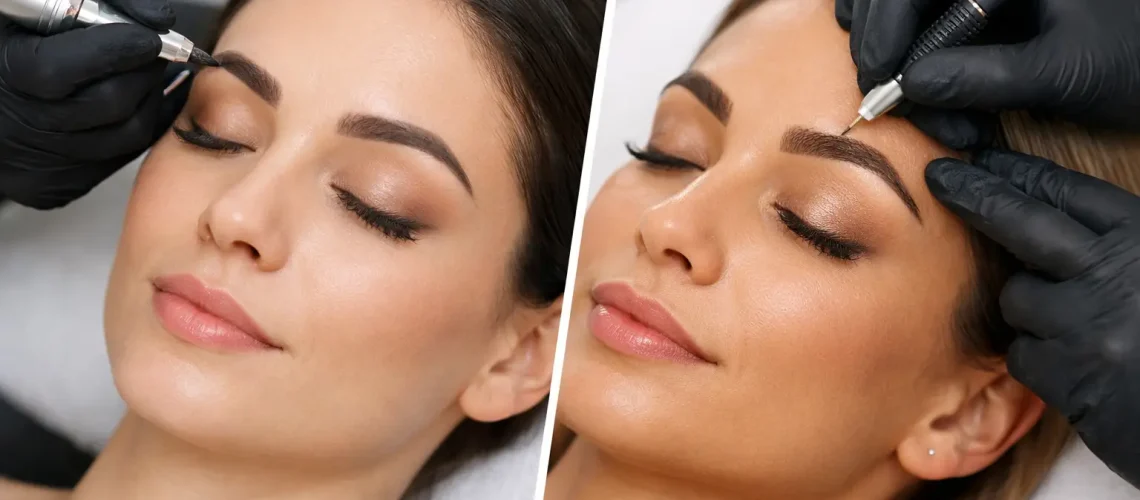
A beautifully shaped brow can change the way your whole face feels – more balanced, polished, and effortlessly put together before you apply a stitch of makeup. But when choosing between powder brows vs microblading, the best option is not simply the one you see most often online. It is the technique that respects your skin, complements your features, and supports the soft, natural result you want to see every morning.
Both services are forms of permanent makeup, also called cosmetic tattooing. Each can help fill sparse areas, improve symmetry, define an uneven shape, and reduce the time spent with a brow pencil. Their finished effects, healing patterns, and long-term wear are quite different, which is why a thoughtful consultation matters.
Powder Brows vs Microblading: The Key Difference
Microblading creates the appearance of individual brow hairs. A trained artist uses a handheld tool with tiny needles to place fine, hairlike strokes of pigment into the skin. The goal is a delicate, realistic enhancement that blends with the natural hairs already present.
Powder brows use a shading technique, typically completed with a cosmetic tattoo machine, to create a soft, filled-in appearance. Despite the name, the result does not have to look bold or heavily made up. Skilled application can be very airy at the front of the brow and gradually more defined through the arch and tail. Think of the finish as the soft polish of brow powder rather than a solid block of color.
The choice is often less about which treatment is “better” and more about the look you prefer, your skin type, daily routine, and the condition of your natural brows.
What Microblading Looks Like
Microblading can be especially appealing if you want subtle definition and have dry to normal skin with visible natural brow hair. The fine strokes can fill small gaps or create the impression of fuller brows without changing your overall look dramatically.
When healed well, microblading may look almost undetectable from a conversational distance. It is often a lovely fit for someone who rarely wears brow makeup, prefers a feathered appearance, and wants to preserve a very natural aesthetic.
There are trade-offs. Because the technique relies on crisp strokes, it may not be ideal for every skin type. Oily skin, large pores, frequent sweating, and certain skincare routines can cause strokes to blur, soften, or fade less predictably over time. Mature skin can also require a careful assessment, as skin texture and elasticity influence how fine strokes heal.
Microblading is not designed to replace a full, makeup-style brow. If your brows have extensive hair loss, very sparse tails, or significant asymmetry, hair strokes alone may not give you the coverage you are hoping for.
What Powder Brows Look Like
Powder brows create a more diffused, softly shaded result. They can be customized from barely there to more polished, depending on your preferences. A lighter, misty front paired with a gentle gradient through the body of the brow can make the face look refreshed without appearing overdone.
This technique is often a strong choice for clients with oily or combination skin because shading generally heals more consistently than delicate hair strokes on these skin types. It can also be a beautiful option for clients who regularly fill in their brows with pencil, pomade, or powder and want that finished appearance to last.
Powder brows are versatile. They can enhance brows that are thin, uneven, patchy, over-tweezed, or simply difficult to shape each morning. They also allow the artist to create clearer structure where natural hair is limited.
The word “powder” sometimes makes people worry their brows will look harsh. The opposite can be true when the treatment is planned with restraint. Color, saturation, shape, and density should be tailored to your complexion, hair color, bone structure, and comfort level. The goal is not to give every client the same brow. It is to create a brow that belongs on her face.
Which Technique Lasts Longer?
Permanent makeup fades gradually, and no cosmetic brow tattoo should be treated as completely maintenance-free. Your skin naturally renews itself, pigment settles differently from person to person, and sun exposure, skincare products, medications, and lifestyle habits can all affect longevity.
Microblading commonly requires a color refresh around every 12 to 18 months, though some clients need maintenance sooner. Powder brows often retain their overall shape and soft shading longer, with many clients returning for a refresh in roughly 18 to 30 months. These are general ranges, not guarantees.
A well-executed touch-up is part of maintaining an elegant result. Waiting until pigment has faded almost completely can make it harder to preserve the original shape and tone. During a maintenance visit, the brow can be softened, adjusted, and refreshed with your current style in mind.
Healing: What to Expect From Each
Both powder brows and microblading involve a healing process, and the brows will not look exactly as they do on appointment day. Immediately afterward, they often appear darker, warmer, and more defined than the healed result. Over the next several days, light flaking or peeling can occur. Then the color may seem to fade substantially before gradually returning as the skin finishes healing.
Microbladed strokes can look sharper at first and then soften as they settle. Powder brows may look more saturated during the first few days, but they heal into a lighter, more translucent finish. A perfection session is commonly scheduled after initial healing so the artist can evaluate pigment retention and make refined adjustments.
Following aftercare instructions carefully protects your investment. Your provider may ask you to avoid getting the brow area wet for a specified period, avoid picking or scratching, and pause activities that create excessive heat or sweat. Swimming, sun exposure, exfoliating acids, retinoids, and certain facial treatments should also be timed appropriately around your appointment.
Your Skin Type Can Guide the Decision
Skin type is one of the most practical considerations in this decision. Fine hair strokes require a stable canvas to remain defined. Dry to normal skin often offers the best conditions for traditional microblading, particularly when the client has enough natural brow hair to support the illusion.
If your skin is oily, textured, or prone to larger pores through the brow area, powder brows may offer more reliable healed results. The soft shading is less dependent on each individual stroke staying crisp. Combination techniques, which pair hairlike strokes with shading, may also be considered for the right candidate.
A reputable provider will not promise the same outcome for every face or every skin type. At Envious Aesthetics Medspa, that personalized approach is central to creating brows that look refined in real life, not only in a filtered photo.
Consider Your Everyday Makeup Style
Think about how you want to look on an ordinary Tuesday morning. If you love the idea of waking up with natural-looking, softly filled brows and typically use brow makeup, powder brows may align with your routine. If your goal is to camouflage a few sparse spots while keeping the effect as close as possible to natural hair, microblading may be the better match.
It also helps to consider how much definition you enjoy. Someone who wears a full face of makeup most days may feel underwhelmed by very subtle hair strokes. Someone with a minimal beauty routine may find a strong powder brow too structured. Neither preference is wrong. The right treatment should feel like an elevated version of you.
Bring inspiration photos to your consultation, but use them as a starting point rather than a promise. Brow density, existing hair pattern, facial proportions, skin condition, and pigment history all influence what is possible. A skilled artist can explain whether your desired result is realistic and suggest a plan that protects both your skin and your long-term outcome.
When to Wait Before Permanent Makeup
Permanent makeup is best scheduled when your skin is calm and your health history has been reviewed. Active irritation, a sunburn, a flare-up around the brow area, or recent use of certain treatments may mean it is wiser to postpone. Pregnancy, breastfeeding, medications, medical conditions, and prior cosmetic tattoo work should all be discussed directly with your provider before booking.
If you have previous brow tattooing, do not assume it can simply be covered with a new shape or color. Old pigment may need to fade further, be corrected, or be assessed in person before a safe and flattering plan can be recommended.
The most flattering brow treatment is rarely the trendiest one. Choose the technique that works with your skin, your natural features, and the amount of definition that makes you feel quietly confident when you catch your reflection.

No comment yet, add your voice below!